
The Case for Early Collaboration Between Builders and Architects
Great custom homes are not the product of great design alone. They happen when design and construction thinking are in the room at the same time, from the very beginning.
We see it more than we should. An architect puts months into a thoughtful, well-considered design. The client is excited. The drawings are finished. Then the project goes out to bid and the numbers come back way over budget.
What happens next is painful for everyone. The design gets cut back. Finishes are downgraded. Timelines slip while the team scrambles to reconcile what was drawn with what can actually be built for the money available. And the client who was genuinely excited about their home starts to lose confidence in the whole process.
None of that had to happen. The design was not the problem. The problem was that no one pressure-tested it against real costs and real site conditions while there was still room to adjust.
The Traditional Approach Has a Blind Spot
Most residential projects still follow a linear path. The architect designs. The builder bids. The client hopes it all lines up. And in our experience, it rarely does, at least not without some painful revisions.
When a builder first sees the drawings at the bidding stage, they are inheriting months of decisions that were made without their input. Material choices that might not reflect current pricing or lead times. Structural approaches that could have been simplified. Site conditions—ledge, groundwater, access constraints—that nobody investigated early enough. By the time those issues come to light, changing course is expensive and demoralizing.
The fix is not a different architect or a cheaper builder. It is getting both in the room sooner.
The earlier a builder is at the table, the fewer surprises show up in the field. We have seen it over and over again—it is the most consistent pattern in projects that go well.
What Early Collaboration Looks Like in Practice
To be clear: early collaboration does not mean the builder takes over the design. It means the builder contributes real, grounded input—on costs, site conditions, materials, constructability—while the design is still fluid enough to absorb it without compromise.
When we are engaged during preconstruction, we work alongside the architect and consultants through three overlapping stages:
During Concept and Schematic Design
We develop a concept-level budget with clear assumptions so everyone is working from the same financial reality. This is also when we start digging into site-specific factors—access, topography, soil, potential rock—because those conditions shape everything that follows.
During Design Development
As the architect refines the design, we update cost models in real time. We review material selections for pricing, availability, and lead time. We evaluate structural and mechanical systems for constructability. And when trade-offs come up, because they always do, we present options with honest recommendations so the client can make an informed call, not a rushed one.
During Construction Documents
This is where we perform detailed constructability reviews. We are looking for scope gaps, coordination conflicts, details that might get interpreted differently by different trades in the field. We bring in key subcontractors—steel, mechanical, glazing, waterproofing—for early input on execution and pricing. The goal is a set of documents that is not just well designed, but buildable and bid-ready, with fewer of the ambiguities that turn into change orders later.
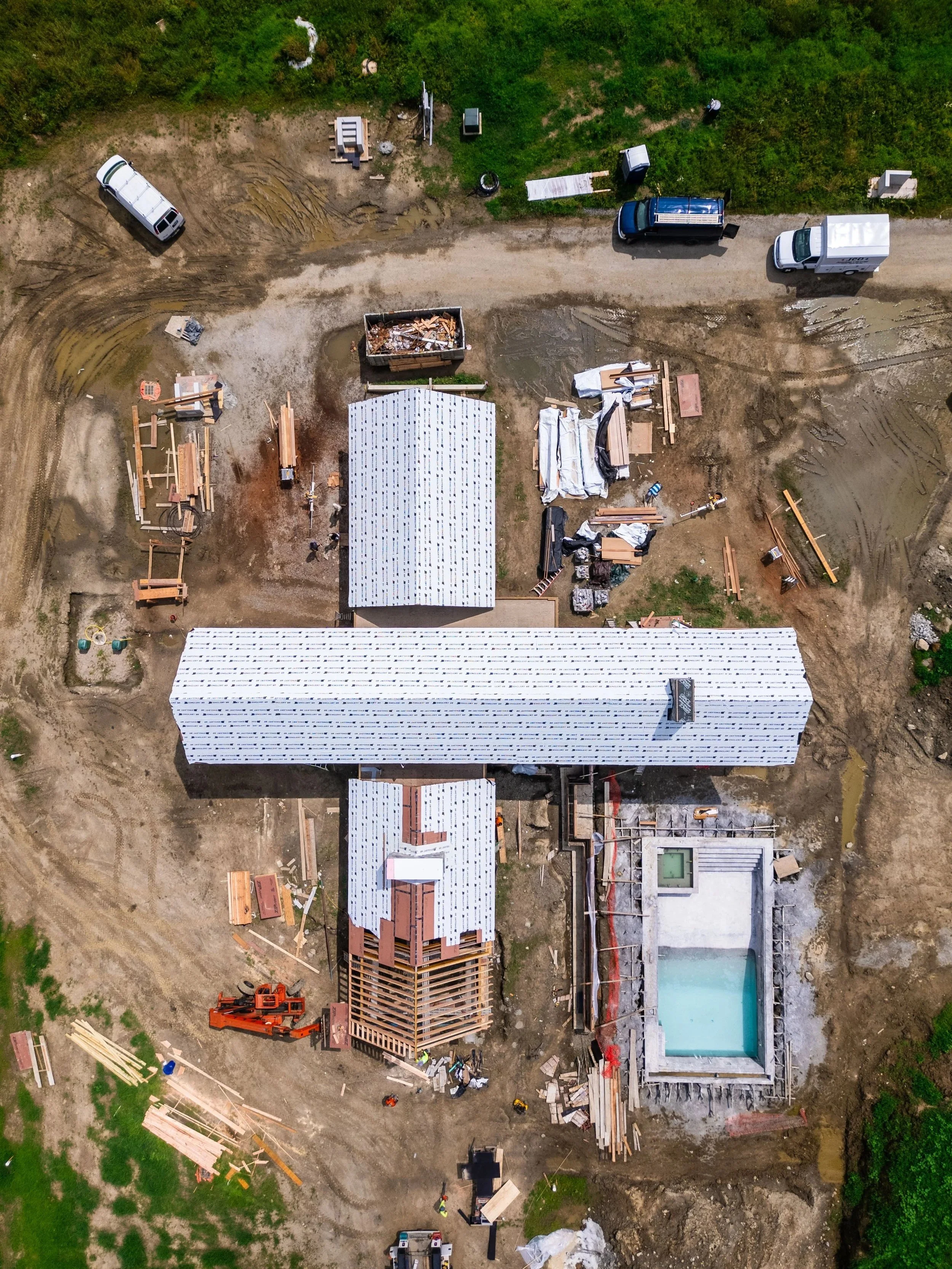
Sharon, CT
Two Approaches, Two Outcomes
Builder Engaged at Bid
Budget estimated after design is done
Overruns force reactive redesign
Site conditions discovered mid-build
Scope gaps create change orders
Long-lead items identified too late
Client caught between architect and builder
Builder Engaged Early
Budget evolves alongside the design
Cost-conscious decisions happen proactively
Site risks identified and planned for upfront
Scope is tight and coordinated before bid
Procurement planned around the schedule
Client feels informed and in control
Why Architects Should Care About This
We have heard architects express concern that bringing a builder in early will compromise their creative control. In our experience, the opposite is true.
When budget alignment happens throughout design rather than in a single, high-stakes moment at the end, the architect's vision is far more likely to survive intact. The material choices that make the design special? They stay. The considered details and proportions? They make it through. Because the team caught the real cost drivers early and dealt with them when it was still easy to adjust not after the drawings were done and the client was emotionally attached to every line.
Early builder involvement also cuts down on rework. We catch coordination issues and detailing conflicts during design development, before they require revisions to finished drawings. That saves the architect time and keeps the project moving.
And there is a less obvious benefit: it strengthens the architect's relationship with the client. When the budget holds and the process runs smoothly, the client's trust in their architect deepens. That trust leads to referrals, repeat work, and a reputation for delivering not just good design but good outcomes.
A Word on Independence
We want to be direct about something: this is not a design-build pitch. The architect leads the design. The builder leads the construction. Those roles stay separate. What changes is the timing and quality of information shared between the two.
That separation actually matters. It preserves the checks and balances that protect the client. Early collaboration does not require consolidation—it just requires a willingness to share information sooner and more openly than the traditional process demands.
What Builders Need to Bring to the Table
This only works if the builder adds real value during design, not just opinions. Here is what we think a serious preconstruction partner should contribute:
Accurate, Current Pricing
Architects have a general sense of costs. Builders price these items every week. A builder who can produce detailed, itemized estimates at each design milestone gives the whole team something to actually work with. Not just a guess and a hope.
A Sharp Eye for Constructability
Good builders read drawings for what they say and what they leave open to interpretation. Catching ambiguities, coordination gaps, and execution risks before documents are final prevents the kind of field improvisation that erodes design intent.
The Right Trade Relationships
On complex projects, the mechanical engineer, the steel fabricator, the waterproofing contractor, and the glazing supplier all have input that can improve the design, if they are asked early enough. A builder with strong trade partnerships can bring those voices to the table when it matters most.
Schedule Awareness
Long-lead items, permitting timelines, and seasonal constraints should shape the design schedule. Not ambush the team after documents are finished. A builder who is tracking procurement and phasing alongside design keeps everyone out of trouble.
The Bottom Line
When architects and builders work together from the start, the whole dynamic changes. Decisions get made with better information. Budgets stay honest. Design intent carries through to the finished home because the builder understands it deeply. Not from reading a set of finished drawings cold, but from months of working alongside the architect as the design came together.
And the client? They get something that is surprisingly rare in custom residential construction: a process that feels coordinated, predictable, and respectful of their time. They are not stuck in the middle of two professionals who barely know each other. They are supported by a team that has been aligned from day one.
If you are an architect, a homeowner starting to plan a project, or a design professional figuring out how to structure the next one. The question is not whether early builder involvement helps. It is whether you can afford to skip it.